Wednesday, July 31, 2013

Brownie Who?

If you're familiar with the Brownie camera, you might not give its name a second thought. After all, Brownies were produced for decades and many of us grew up around them. That's just the name, right?

But when they were introduced in 1900, the name was significant. The cameras were advertised as being so simple to operate, even a child could do it. And the name? A popular cartoon at the time.


At the turn of the 20th century stories were read in serial form by many people. Popular magazines of the day ran them, like Palmer Cox's series in Lady's Home Journal. His characters also filled his  children's books.


Brownies are akin to fairies and goblins. They are mischievous, but good natured. They are the Celtic little people, and Cox illustrated their adventures.


Cox's Brownies were used in merchandise and so Kodak borrowed them for their new advertising campaign. Reportedly, Palmer Cox never received compensation, although if you think about it, his Brownies would be all but forgotten today if not for the Brownie camera. So at least he lives in infamy.

If you'd like to know more about the Brownie camera, here's a great article from The Franklin Institute.


What do you think about these Brownies? Cute? Not so much?


Read about Grace McCaffery and her Brownie Camera in Grace's Pictures.

Friday, July 26, 2013

A 1900 View of the Future

Verne
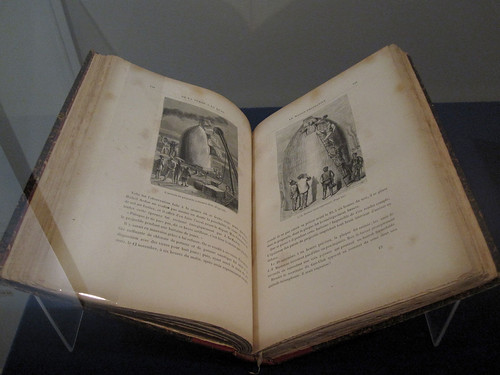
Jules Verne's From The Earth to The Moon

I'm working through edits on Book Two of the Ellis Island Series, Annie's Stories. One of the characters enjoys reading the contemporary authors Jules Verne and H.G. Wells, who were known for their futuristic notions.

I was reading a column in the New York Times from 1901 written by Wells where he discusses the idea that in the year 2000 suburbs will stretch far out from big cities like New York and London because automobiles will travel far faster than 30 miles per hour. It's pretty interesting.

That's why this blog post from The Bowery Boys caught my attention. Thankfully some predictions did not come true. (Gotta love The Bowery Boys!)

But many things were uncannily foreseen. Did you know cell phones were predicted way back in 1909? It's true. Read about it.

Incredible. What's your prediction for the future?

Wednesday, July 24, 2013

Hello? Where Are You?

I'd like to find out where you all hang out. This will only take a second.


Create your free online surveys with SurveyMonkey , the world's leading questionnaire tool.

Monday, July 22, 2013

Do Native New Yorkers Exist?

Photos from the New York Times
From left, DeRuiter Family; Hiroko Masuike/The New York Times
Christian DeRuiter strolls along the Hudson, which runs through his family’s long history in the city, dating back to Dutch colonial days. Left, Johannah de Bloch and Frederick DeRuiter, Mr. DeRuiter’s paternal grandparents.

I ran across this interesting article in the New York Times by Constance Rosenblum. It reminded me that we're all immigrants here in America, with only rare exceptions. Rosenblum notes that the majority of New Yorkers today came from somewhere else.

The article also drove home for me the reason I wrote Grace's Pictures. I thought I'd share it here with you. Can you relate to any of the people in this article?

Family Tree New York


Tuesday, July 16, 2013

Immigration: Hot Topic Then and Now

I don't have to tell you immigration is a hot topic in America today. Congress has been debating a bill all summer it seems. Who is here legally? Who has rights? Who doesn't? Who will take jobs from Americans? What immigration regulations need to be tightened or changed?

Sounds right out of today's headlines, doesn't it? But these are questions debated during the time I set my novel, Grace's Pictures.

Of course, the headlines weren't at all politically correct back then.


Harpers Illustration from 1898
And if you want to go further back in history you'll find those living in America discriminating against the new arrivals for as long as we've been recording our history.

There surely are important issues to settle. I'm not about to debate them here. But even so it never ceases to amaze me how history repeats itself. The above headline (or more accurately, sub headline) appeared in the New York Times, December 23, 1901. In the article one of the points to be addressed by Congress was:

"To add to the present law whatever seems to be necessary to meet the advanced judgment of those who have been studying the immigration question carefully for the last quarter of a century."

Cartoon from 1928.
It seems what was deemed necessary was to increase a "head tax" on aliens, triple it actually. They were concerned that the immigrations would become a burden, "criminals and paupers." Tracking these individuals would be costly, thus the need to tax them. Anyone with a contagious disease, the insane, anyone likely to become a public charge was to be deported. Likewise polygamists, anarchists, prostitutes and those bringing in prostitutes. In addition, anyone who was promised work in America
was to be deported. They could work after they got here, but no one needing labor was to look for it outside of the US instead of employing Americans already here. Interesting, huh? There were exclusions for musicians, actors, ministers, or those to be employed in domestic service. It's getting really complicated, isn't it?

The article writer concludes that those who have examined this new bill claim it is "quite up to date, that it is built intelligently on the experience of those who have been administering the immigration laws for years, and that it does justice to all interests which it affects."

Well, we can only hope our officials will keep this in mind today.