This documentary clip does an excellent job of giving you the feeling of having stepped into the immigrant's shoes as he or she comes through Ellis Island. You can hear their words and see what they would have seen (although in black and white.) I thought it was powerful so I wanted to share it with you. Enjoy!

It's been said the key to unlocking the future is found in the past. I tell stories about those who went before us and left guideposts for us to find. Take up this journey to the past with me and be inspired, entertained, and enlightened.
Showing posts with label immigrants. Show all posts
Showing posts with label immigrants. Show all posts
Friday, April 25, 2014

Saturday, March 29, 2014
Places in My Novel Grace's Pictures
One of the places in my novel (Grace's Pictures) where a lot of the action takes place is Battery Park.
Not only is Battery Park a beautiful place to visit where you can watch boats and observe the Statue of Liberty, it is full of history--the very spot many of our ancestors first embarked after leaving Ellis Island.
When I was there I admired this statue and the old trees surrounding it, imagining that many early immigrants must have sat near it and rested from their journeys. If you read Grace's Pictures, you'll remember this statue.

At the edge of Battery Park is Castle Clinton, which at the time of my Ellis Island series was an aquarium.
So much history exists on that small stretch of a park. Certainly much has changed. There are many statues now, not just the Ericsson one. The trees have grown large. On the weekends the park is filled with tourists, many who are preparing to take the ferry over to the Statue of Liberty and Ellis Island. Street hawkers rest here, but there were certainly those in the era of my novels. And I noted something else. A rat scurried past me when I was there, and so Grace experiences the same thing in my novel. But don't let that deter you if you have the chance to visit. Go sit on a bench and watch the sunset and think about our immigrant ancestors arriving in that spot over a hundred years ago. That's what I was doing when I took this photograph.
Not only is Battery Park a beautiful place to visit where you can watch boats and observe the Statue of Liberty, it is full of history--the very spot many of our ancestors first embarked after leaving Ellis Island.
 |
| Immigrants arriving in Battery Park. |
At the edge of Battery Park is Castle Clinton, which at the time of my Ellis Island series was an aquarium.
 |
| Today |
 |
| In 1917 |
So much history exists on that small stretch of a park. Certainly much has changed. There are many statues now, not just the Ericsson one. The trees have grown large. On the weekends the park is filled with tourists, many who are preparing to take the ferry over to the Statue of Liberty and Ellis Island. Street hawkers rest here, but there were certainly those in the era of my novels. And I noted something else. A rat scurried past me when I was there, and so Grace experiences the same thing in my novel. But don't let that deter you if you have the chance to visit. Go sit on a bench and watch the sunset and think about our immigrant ancestors arriving in that spot over a hundred years ago. That's what I was doing when I took this photograph.
 |
| ©2012 Cindy Thomson |
Thursday, March 27, 2014
A Voice From Ireland's Past
Ancestry.com offers immigrant interviews to listen to for free. I could spend all day listening! Here is one with a lady named Lillian Doran Cavanaugh from Ballymore, County Westmeath.
http://ancstry.me/1g4L7RG
I found this amusing in some spots, such as when she was asked if she knew how her parents met. She says she doesn't know: "They don't talk that way over there."
Lillian and her sister Peg departed Ireland at Queenstown for America where their uncles awaited them.

At about 27:09 on the recording Lillian talks about her arrival in America.
http://ancstry.me/1g4L7RG
I found this amusing in some spots, such as when she was asked if she knew how her parents met. She says she doesn't know: "They don't talk that way over there."
 |
| This may have been Lillian Doran Cavanaugh's church in Ireland |
Monday, July 22, 2013
Do Native New Yorkers Exist?
 |
Photos from the New York TimesFrom left, DeRuiter Family; Hiroko Masuike/The New York Times
Christian DeRuiter strolls along the Hudson, which runs through his family’s long history in the city, dating back to Dutch colonial days. Left, Johannah de Bloch and Frederick DeRuiter, Mr. DeRuiter’s paternal grandparents.
|
I ran across this interesting article in the New York Times by Constance Rosenblum. It reminded me that we're all immigrants here in America, with only rare exceptions. Rosenblum notes that the majority of New Yorkers today came from somewhere else.
The article also drove home for me the reason I wrote Grace's Pictures. I thought I'd share it here with you. Can you relate to any of the people in this article?
Family Tree New York
Tuesday, July 16, 2013
Immigration: Hot Topic Then and Now
I don't have to tell you immigration is a hot topic in America today. Congress has been debating a bill all summer it seems. Who is here legally? Who has rights? Who doesn't? Who will take jobs from Americans? What immigration regulations need to be tightened or changed?
Sounds right out of today's headlines, doesn't it? But these are questions debated during the time I set my novel, Grace's Pictures.
Of course, the headlines weren't at all politically correct back then.

And if you want to go further back in history you'll find those living in America discriminating against the new arrivals for as long as we've been recording our history.
There surely are important issues to settle. I'm not about to debate them here. But even so it never ceases to amaze me how history repeats itself. The above headline (or more accurately, sub headline) appeared in the New York Times, December 23, 1901. In the article one of the points to be addressed by Congress was:
"To add to the present law whatever seems to be necessary to meet the advanced judgment of those who have been studying the immigration question carefully for the last quarter of a century."
It seems what was deemed necessary was to increase a "head tax" on aliens, triple it actually. They were concerned that the immigrations would become a burden, "criminals and paupers." Tracking these individuals would be costly, thus the need to tax them. Anyone with a contagious disease, the insane, anyone likely to become a public charge was to be deported. Likewise polygamists, anarchists, prostitutes and those bringing in prostitutes. In addition, anyone who was promised work in America
was to be deported. They could work after they got here, but no one needing labor was to look for it outside of the US instead of employing Americans already here. Interesting, huh? There were exclusions for musicians, actors, ministers, or those to be employed in domestic service. It's getting really complicated, isn't it?
The article writer concludes that those who have examined this new bill claim it is "quite up to date, that it is built intelligently on the experience of those who have been administering the immigration laws for years, and that it does justice to all interests which it affects."
Well, we can only hope our officials will keep this in mind today.
Sounds right out of today's headlines, doesn't it? But these are questions debated during the time I set my novel, Grace's Pictures.
Of course, the headlines weren't at all politically correct back then.

 |
| Harpers Illustration from 1898 |
There surely are important issues to settle. I'm not about to debate them here. But even so it never ceases to amaze me how history repeats itself. The above headline (or more accurately, sub headline) appeared in the New York Times, December 23, 1901. In the article one of the points to be addressed by Congress was:
"To add to the present law whatever seems to be necessary to meet the advanced judgment of those who have been studying the immigration question carefully for the last quarter of a century."
 |
| Cartoon from 1928. |
was to be deported. They could work after they got here, but no one needing labor was to look for it outside of the US instead of employing Americans already here. Interesting, huh? There were exclusions for musicians, actors, ministers, or those to be employed in domestic service. It's getting really complicated, isn't it?
The article writer concludes that those who have examined this new bill claim it is "quite up to date, that it is built intelligently on the experience of those who have been administering the immigration laws for years, and that it does justice to all interests which it affects."
Well, we can only hope our officials will keep this in mind today.
Thursday, July 4, 2013
Hello Again, Lady Liberty!
 |
| Click on photo for Flickr credit |
Today the Statue of Liberty re-opens to visitors after being closed since Superstorm Sandy hit the area last October.
The statue was undamaged, sitting on high ground on Liberty Island, but 8 feet of water damaged the island’s boilers and electrical systems, so repairs were necessary before tourists could be admitted.
The statue was undamaged, sitting on high ground on Liberty Island, but 8 feet of water damaged the island’s boilers and electrical systems, so repairs were necessary before tourists could be admitted.
The Ellis Island Immigrant Museum remains closed.
Given all the widespread damage Sandy caused, you might wonder how the statue survived so well. Lady Liberty is really an engineering marvel. Even though the harbor provides some degree of shelter from most storms, the statue's designer, Alexandre-Gustave Eiffel, constructed an internal skeleton that is so mathematically intense it baffles my mind. It's said to be capable of surviving hurricane force winds. If you'd like to learn more, visit this page or this one. And yes, this is the man who went on to build the Eiffel Tower.
DYK?
 |
| NPS photo |
- The statue has been closed before, including after a bombing incident in 1916 referred to as the Black Tom Explosion, when immigrants on Ellis Island had to be evacuated to Manhattan, and in the aftermath of 9-11.
- The statue was originally copper-colored like a penny. The oxidation took about thirty years to turn the statue completely green.
- The torch used to be accessible to visitors, but it has been off limits for safety reasons since the Black Tom Explosion.
- The arm and torch were on display before the statue was completed, as a fund raising effort.
- One of the symbolisms the statue bears is a broken chain. It cannot be seen from the ground. It is partially hidden because at the time it was feared it would be too polarizing following the Civil War.
 |
| Click on photo for Flickr credit |
I think most Americans are pleased this symbol of our freedom and the first sight many of our immigrant ancestors saw when they first entered our country is open again. Happy 4th, everyone!

To read about an Irish immigrant who passed through Ellis Island, be sure to pick up my new book, Grace's Pictures.

Wednesday, June 5, 2013
The Ellis Island Photographer
 |
| Italian immigrant photographed by A. Sherman, NYPL file. |
 |
| From the NYPL file, photograph of Scottish boys taken by Augustus Sherman |
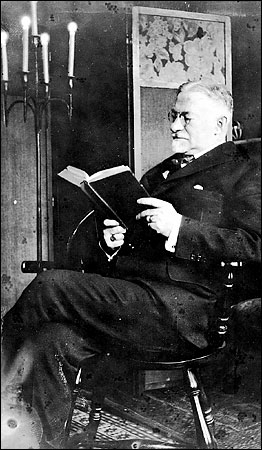
Who Was Augustus F. Sherman?
 |
| National Park Service photograph. |
He was never married and was the second surviving son born to Estella T. and Henry Sherman. He had an older brother named Henry. We know Augustus had a niece who donated his photos to Ellis Island in 1960 and her name was Mary W. Sherman Peters. In 1880 he was living with his parents in Pennsylvania along with some boarders and servants. But by 1900 Estella was a widow and she and Augustus were living in New York City with one boarder. By 1910 Estella and Augustus were boarders in someone else's home. Augustus's occupation is given in the census as chief clerk at Immigration Service.
On Ancestry I found a Sons of the American Revolution application that gives Estella's death date as Jan. 23, 1912, and Henry's as Nov. 24, 1887. There is a short obituary on Estella quoted from a newspaper on Rootsweb that supports the 1912 date.
The Ellis Island website states that both Augustus and his older brother were clerks at Ellis Island. His brother quit to become a lawyer.
Sherman's Photographs
 |
| Dutch Woman photographed by A. Sherman on Ellis Island, from the NYPL file. |
 |
| This little Swedish girl doesn't look too pleased. Photographed by A. Sherman on Ellis Island, from the NYPL file. |
It's enthralling to see the expressions on these people's faces. Often they were being detained, that's why he was able to catch up with them, and sometimes they were even deported after these photographs were taken. The vast majority of immigrants were registered and moved along, but we've all heard stories of those who were deported for reasons of illness, mental problems, or because they were deemed likely to become a public charge.
 |
| Serbians photographed on Ellis Island by A. Sherman, from the NYPL file. |
Sherman took over 200 photographs of immigrants. Once the newcomers got to Battery Park to begin their new lives in America, they shed their native garb, so these photographs might have been the last time they wore these costumes.
 |
| Algerian immigrant photographed on Ellis Island by A. Sherman, NYPL file. |
They wanted to fit in with Americans. Funny, isn't it, how now people come together for festivals and celebrations and work hard to recreate those historical outfits.
 |
| Russian immigrants on Ellis Island photographed by A. Sherman, from the NYPL file. |
 |
| Photo by Clickr Bee |
Augustus Sherman in Grace's Pictures
In my novel, Grace's Pictures, Grace McCaffery has her photograph taken on Ellis Island by Augustus Sherman. The photograph captures her fear and discomfort at that moment. Later, when she sees that photograph, she is not pleased to see that in her own face.
 |
| Author's paternal grandparents, Margaret and Lloyd Peters |
I cherish the photographs I have of my ancestors. There is one of my grandparents holding up a dollar bill. My father told me it was the first dollar they made in their new store. It was a special moment for them captured in time before I was born. I'm glad I got to see it. What about you? Any special photographs of your ancestors?
Thursday, January 10, 2013
Learn More About Ellis Island
I love the Bowery Boys podcast. I've learned a lot from them about New York history. If you're a history buff like me, or you are curious because you are among the multitudes whose ancestors came through Ellis Island, have a listen.

http://boweryboys.libsyn.com/webpage?search=ellis+island&Submit=Search
http://boweryboys.libsyn.com/webpage?search=ellis+island&Submit=Search
Monday, December 31, 2012
A New Beginning

Why did the immigrants of the early 20th century come to America? For most it was to start anew. As hard as life was for most immigrants, it was far worse where they came from. With few opportunities to make their way in life, they took a chance on the American dream. You've heard stories, I'm sure, of many (even today) who were very successful. For a lot of immigrants, the dream was realized not for them, but for their children who were born in America.
From the National Parks Service, this chart shows the numbers and nationalities who immigrated through Ellis Island. The numbers were way down during WWI, but other than those years hundreds of thousands came every year, looking for a new life.

In my first novel of the Ellis Island Series, Grace's Pictures, my character Grace was taken to a poor house in Ireland when her widowed mother could not pay the rent on their cottage. Later, she was sponosored and sent to America. She had no choice but to start anew in America, but she soon found more opportunity to improve her life standing than she could have ever imagined. And freedom to wander the streets if she wanted, whenever she wanted--something that had been impossible in the poor house. But this freedom gets her into trouble when she takes along her new Brownie camera.
I imagine immigrants like Grace were completely unprepared for both the good and the bad in the massive city of New York.
What do you think?
Subscribe to:
Posts (Atom)